Home · About Us · Mission & Vision · The Science · Pipeline · Team · Contact · Investors
Equine Phage
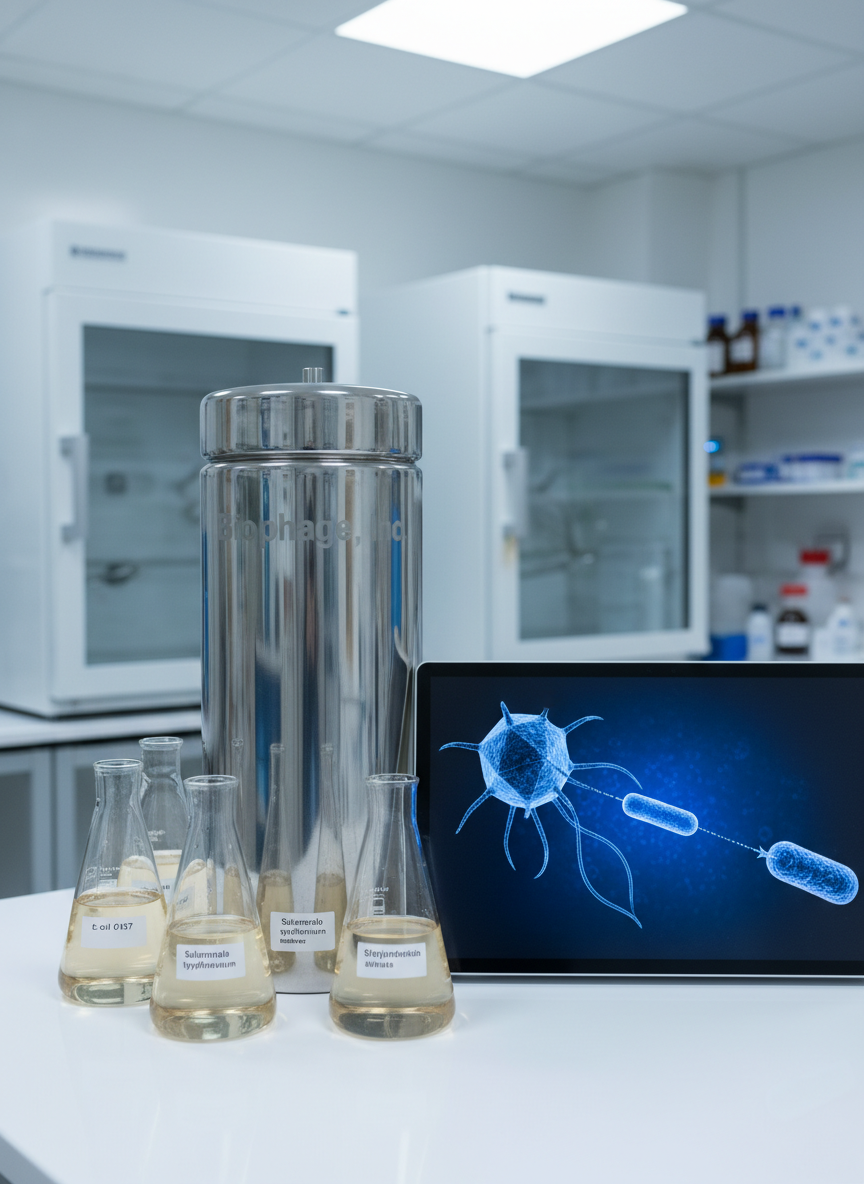
Bacteriophages — viruses that infect and kill bacteria — are among the most abundant and precisely targeted biological agents on Earth. Biophage harnesses them as living, self-limiting therapeutics that eliminate the specific pathogens driving disease in horses, livestock, and farmed fish, without the collateral damage of broad-spectrum antibiotics.
Bacteriophages
A phage recognizes and binds only its target bacterium, injects its genome, replicates inside the cell, and bursts it — then moves on to the next target and stops once the infection clears. This mechanism gives phage therapy three advantages antibiotics cannot match: precision (only the pathogen is killed, so the animal’s protective microbiome stays intact), activity against resistant strains (phages kill bacteria regardless of antibiotic resistance, directly addressing antimicrobial resistance), and no drug residues in meat, milk, or seafood, a critical requirement for food-animal and aquaculture markets. Our lead program targets Streptococcus equi, the cause of strangles — the most prevalent and economically damaging infectious disease in horses worldwide — with additional livestock and aquaculture programs (including Aeromonas and Streptococcus pathogens in farmed fish) following the same platform.

Why phages, why now
Antimicrobial resistance is accelerating while few new antibiotics reach the market, and regulatory pathways for phage-based products are actively opening at both the EPA and FDA. Biophage was built by clinicians who have managed these infections firsthand to move targeted, field-deployable phage therapies from discovery to the paddock.

